I was thinking about 15 Best Tourist and Archaeological Sites in China (2026 Travel Guide) and, honestly, I did not know enough to judge which places truly matter most. I wanted the best mix of history, culture, and travel value, but my knowledge was limited.
So I reached for my mobile phone, unlocked it, and opened the AI app to get a clear, unbiased answer from someone who could look at the full picture without favoring one region or one language group.
So I asked him: What are the top 15 entities regarding this subject, which are considered the best tourist and archaeological sites in China that I absolutely must know?
He replied: China has one of the world’s deepest historical records, with sites from ancient kingdoms, imperial dynasties, Buddhist traditions, and early human history. I will give you a globally accurate, balanced list of the most important places, chosen for their cultural value, archaeological importance, and travel significance.

15 Best Tourist and Archaeological Sites in China (2026 Travel Guide)
1- The Great Wall of China
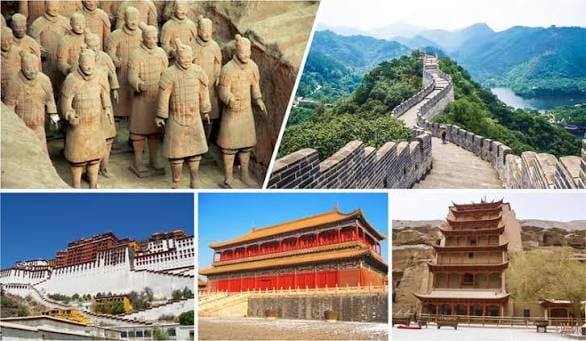
The Great Wall is one of the most famous heritage structures on Earth. It is not one single wall, but a long network of walls, watchtowers, and fortifications built across many dynasties, especially the Qin, Han, and Ming. Its full story shows how China defended frontier regions over many centuries.
It is critically important because it represents military engineering, state organization, and the scale of ancient labor. For travelers, it offers a powerful view of China’s landscape and history at the same time.
2- The Mausoleum of the First Qin Emperor and the Terracotta Army
This site near Xi’an is one of the most important archaeological discoveries in the world. The Terracotta Army was built to guard the tomb of Qin Shi Huang, the first emperor to unify China in 221 BCE. The life-size soldiers, horses, and chariots show extraordinary ancient craftsmanship.
Its importance is global because it gives direct evidence of imperial power, burial beliefs, and large-scale ancient production. It is one of the clearest windows into early unified China.
3- The Forbidden City
The Forbidden City in Beijing was the imperial palace of the Ming and Qing dynasties. It contains a huge complex of halls, courtyards, and ceremonial spaces that reflect Chinese court life, political order, and traditional architecture.
It matters because it shows how emperors ruled from the center of power for nearly 500 years. For visitors, it is one of the best places to understand imperial China through preserved buildings and museum collections.
4- The Summer Palace
The Summer Palace in Beijing is a masterpiece of Chinese landscape design and royal retreat culture. It combines lakes, hills, gardens, bridges, and palace buildings in a carefully planned harmony. It was especially important during the Qing dynasty.
It is significant because it shows a different side of imperial life: leisure, art, and harmony with nature. This makes it one of the most beautiful and educational tourist and archaeological sites in China.
5- Mogao Caves
The Mogao Caves near Dunhuang, in Gansu (China), are a treasure of Buddhist art. They were carved over many centuries along the Silk Road and contain murals, sculptures, and manuscripts from different historical periods.
Their importance is enormous because they connect China with Central Asia, India, and broader Buddhist history. They also preserve rare texts and art that help scholars understand religion, trade, and cross-cultural exchange.
6- Longmen Grottoes
The Longmen Grottoes in Henan (China) contain thousands of Buddhist statues and inscriptions carved into limestone cliffs. They were created mainly during the Northern Wei and Tang dynasties.
This site is important because it reflects the growth of Buddhism in China and the high level of stone carving skill. It is also a major source for studying religious art and imperial patronage.
7- Yungang Grottoes
The Yungang Grottoes in Shanxi (China) are another major Buddhist cave complex. They were built during the Northern Wei period and feature giant statues and detailed carvings.
They are crucial because they show early Buddhist art in China and the blending of influences from South Asia, Central Asia, and local Chinese traditions. They are among the finest archaeological art sites in East Asia.
8- Sanxingdui Archaeological Site
Sanxingdui in Sichuan (China) is one of the most exciting archaeological sites in the world. It revealed a mysterious Bronze Age civilization with large masks, statues, and ritual objects unlike those of the central Chinese dynasties.
Its importance is huge because it proves that ancient China was not one uniform culture. It had many regional civilizations, some of which developed highly advanced metalworking and artistic traditions.
9- Anyang and the Yin Ruins
The Yin Ruins in Anyang, Henan (China), were the capital of the late Shang dynasty, one of China’s earliest confirmed dynasties. Oracle bones found here contain the oldest known Chinese writing system in use.
This site is vital because it provides direct written evidence of early Chinese kingship, divination, and state life. It is one of the most important archaeological sites for understanding the origins of Chinese civilization.
10- Pingyao Ancient City
Pingyao in Shanxi (China) is one of the best-preserved ancient walled cities in China. It shows traditional urban planning, merchant culture, and everyday life from the Ming and Qing periods.
It is important because it gives a real sense of how a historic Chinese city functioned. For tourists, it offers a rare chance to walk through an authentic old city that still keeps its original structure.
11- Lijiang Old Town
Lijiang in Yunnan (China) is known for its old town layout, canals, and the culture of the Naxi people. It stands out because it blends Han Chinese, Tibetan, and local minority traditions.
Its value lies in cultural diversity. It shows that China’s heritage is not only imperial and northern, but also regional, multi-ethnic, and deeply connected to mountain trade routes.
12- Fujian Tulou
The Fujian Tulou are large earthen buildings built by the Hakka people in Fujian (China). They are circular or rectangular communal houses designed for defense, family living, and shared community life.
They are important because they show creative vernacular architecture adapted to social and security needs. They also offer insight into how communities organized themselves in southern China.
13- Leshan Giant Buddha
The Leshan Giant Buddha in Sichuan (China) is a massive stone Buddha carved into a cliff overlooking the river. It was built during the Tang dynasty and remains one of the largest ancient Buddha statues in the world.
Its importance is both religious and technical. It shows the scale of Buddhist devotion and the ability of ancient builders to create monumental works in difficult natural conditions.
14- Jiuzhaigou Valley
Jiuzhaigou Valley in Sichuan (China) is a stunning natural site with lakes, waterfalls, forests, and snow-capped scenery. While it is not an archaeological site, it is one of China’s greatest tourist destinations because of its natural beauty and protected status.
It matters because travel in China is not only about old buildings and ruins. Natural heritage is also part of the country’s identity, and Jiuzhaigou shows why landscape preservation is deeply valuable.
15- Zhoukoudian Peking Man Site
Zhoukoudian near Beijing is one of the most important prehistoric sites in China. It is famous for the discovery of Peking Man fossils, which helped researchers study early human evolution in East Asia.
Its importance is global because it connects China to the larger story of human origins. It reminds us that China’s heritage goes far beyond dynasties and includes some of the earliest chapters of human life.
Deepening the Dialogue: Practical Questions About China’s Top Heritage Sites
I asked him to give me a few indispensable questions that any traveler or history lover should ask before planning a visit.
He agreed, and he answered with practical clarity.
I asked him: Which of these sites are best for first-time visitors who want both history and easy travel access?
“He replied: For first-time visitors, the easiest and most rewarding choices are the Great Wall of China, the Forbidden City, the Summer Palace, and the Terracotta Army. These sites are well known, highly informative, and usually easier to reach through major transport hubs. They give a strong introduction to imperial history, architecture, and archaeology.”
I asked him: Which sites are best for people who want real archaeology, not just beautiful scenery?
“He replied: The strongest archaeology-focused sites are the Mausoleum of the First Qin Emperor and the Terracotta Army, the Yin Ruins in Anyang, Sanxingdui, Zhoukoudian, and the Mogao Caves. These places provide physical evidence of ancient life, writing, ritual, technology, and belief systems. They are essential for serious historical understanding.”
I asked him: Are there sites in China that show culture beyond the imperial capitals?
“He replied: Yes, absolutely. Lijiang Old Town, Fujian Tulou, Sanxingdui, and the Mogao Caves show regional culture, ethnic diversity, trade links, and non-capital traditions. This is important because China’s heritage is not limited to Beijing or Xi’an. It includes many local civilizations and minority communities across the country.”
Conclusion:
I am amazed by the sheer value and accuracy of the information I just received. I started out not knowing much, but now I possess highly valuable knowledge about this topic. To summarize, understanding these elements truly changes how we view the whole field. I realized the profound importance of 15 Best Tourist and Archaeological Sites in China (2026 Travel Guide) and how they shape our understanding of the world.