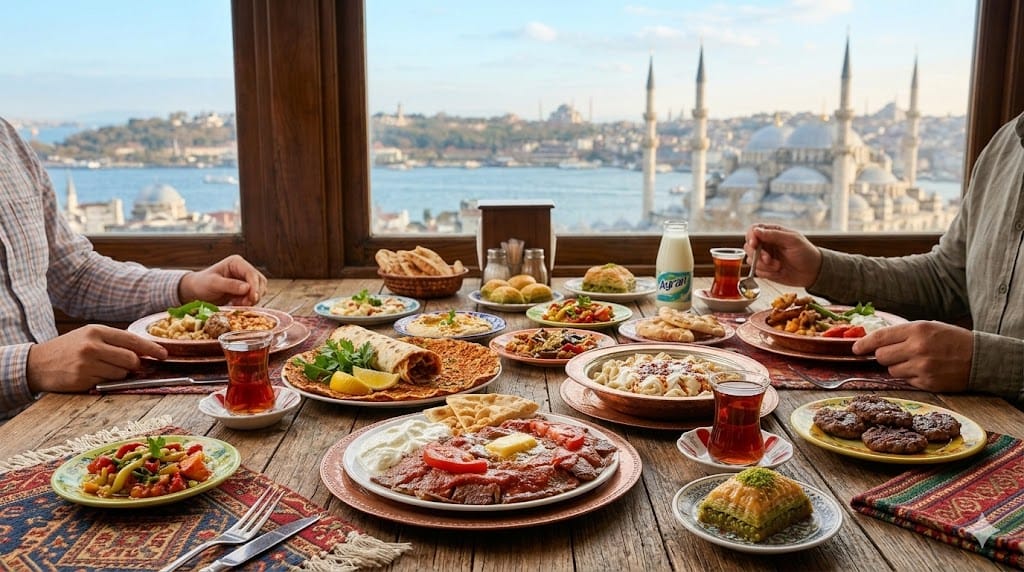
Turkey is a culinary bridge where the spices of the East meet the techniques of the West. Every region offers a unique palette of flavors that reflect centuries of Ottoman history and diverse cultural influences.
When you travel through this vibrant country, exploring the variety of traditional dishes in Turkey becomes a highlight of the journey. From the bustling street stalls of Istanbul to the sophisticated dining rooms of Ankara, the food is a celebration of fresh ingredients.
Whether you are a fan of savory meats, fresh vegetables, or syrup-soaked pastries, the Turkish kitchen has something for everyone. This guide will help you navigate the essential plates you must experience during your 2026 visit.
15 Best Traditional Dishes You Must Try in Turkey (2026 Food Guide)
1. İskender Kebab: A King Among Traditional Dishes in Turkey
İskender Kebab is often considered the pinnacle of meat dishes in the country. It originated in the city of Bursa in the late 19th century and is named after its creator, İskender Efendi.
This dish features thinly sliced donor lamb or beef laid over pieces of warm pita bread. It is then generously topped with a rich tomato sauce and sizzling melted butter, usually poured at your table.
A side of thick, creamy yogurt is served to balance the richness of the meat. For the best experience, visit a specialized “İskender” restaurant in Bursa or Istanbul to see the butter being poured fresh.
2. Mantı: Turkish Ravioli
Mantı consists of tiny, handmade dumplings filled with spiced ground meat, usually lamb or beef. The preparation of these dumplings is an art form, as smaller sizes are traditionally considered a sign of a cook’s skill.
The dumplings are boiled or steamed and then served under a blanket of garlic yogurt. A drizzle of melted butter infused with Aleppo pepper or dried mint is added to create a complex flavor profile.
Kayseri is the most famous city for this dish, but you can find regional variations across the country. Some modern restaurants now offer vegetarian versions with spinach or cheese fillings.
3. Lahmacun: The Crispy Street Classic
Often referred to as Turkish pizza, Lahmacun is one of the most beloved traditional dishes in Turkey for a quick lunch. It consists of a very thin, round piece of dough topped with minced meat, vegetables, and herbs.
The topping usually includes onions, tomatoes, parsley, and spices like paprika and cumin. It is baked in a stone oven until the edges are perfectly crispy.
To eat it like a local, squeeze fresh lemon juice over the top and pile on a handful of parsley and red onions. Roll it up like a wrap and enjoy it with a cold glass of salty Ayran.
4. Baklava: The Sweet Icon of Gaziantep
No food guide would be complete without Baklava, the world-famous pastry made of layers of phyllo dough. These layers are filled with chopped nuts, usually pistachios or walnuts, and held together with sweet syrup.
The city of Gaziantep is the undisputed capital of Baklava, where master chefs use up to 40 layers of paper-thin dough. The quality of the butter and the freshness of the pistachios are what set the best versions apart.
When you eat Baklava, turn it upside down so the syrup hits your palate first. This allows you to appreciate the crunch of the pastry and the richness of the filling simultaneously.
5. Pide: The Boat-Shaped Delight
Pide is a savory bread baked in a wood-fired oven, characterized by its unique boat-like shape. It is a versatile meal that features various toppings depending on the region and your preference.
Common toppings include minced meat (kiymali), chunks of lamb (kusbasili), or a mix of cheeses and eggs. The crust is usually brushed with butter immediately after coming out of the oven to keep it soft.
This is a staple among traditional dishes in Turkey for those looking for a filling and affordable meal. Many local “Pideci” shops allow you to customize your toppings for a personalized experience.
6. Meze: The Art of Starting a Meal
Meze is not just a single dish but a collection of small plates served at the beginning of a meal. This tradition is an integral part of traditional dishes in Turkey, especially during long dinners with friends.
Typical mezes include hummus, muhammara (walnut and pepper dip), haydari (thick yogurt with herbs), and roasted eggplant salad. Seafood mezes, such as marinated octopus or stuffed mussels, are also popular in coastal areas.
The goal of a meze spread is to stimulate the appetite and encourage conversation. It is often accompanied by Rakı, the national anise-flavored spirit, which turns the meal into a social event.
7. Simit: The Ultimate Street Snack
Simit is the quintessential Turkish street food, often described as a cross between a bagel and a pretzel. It is a circular bread encrusted with sesame seeds and typically dipped in molasses before baking.
You will see vendors with red carts or trays balanced on their heads selling Simit at every street corner. It is a favorite among traditional dishes in Turkey for a quick breakfast on the go.
For a more substantial snack, look for vendors who offer Simit with cream cheese or chocolate spread. It is best enjoyed fresh and warm, accompanied by a glass of Turkish tea.
8. Menemen: A Classic Turkish Breakfast
Menemen is a flavorful scramble of eggs, tomatoes, green peppers, and spices. It is the heart of a traditional Turkish breakfast and is usually served in the same small copper pan it was cooked in.
Some people prefer it with onions, while others insist that onions do not belong in the recipe. You can also add sucuk (spicy sausage) or white cheese to make it heartier.
The best way to eat Menemen is by dipping crusty bread directly into the pan to soak up the juices. It is a simple yet deeply satisfying dish that highlights the quality of Turkish produce.
9. Köfte: Regional Meatball Varieties
Köfte refers to Turkish meatballs or patties made from ground meat mixed with crumbs, onions, and various spices. There are hundreds of regional variations of köfte across the country.
Some of the most popular types include Akçaabat köfte with garlic or the spicy İnegöl köfte. These are typically grilled over charcoal and served with grilled peppers, onions, and rice or bulgur.
As one of the most versatile traditional dishes in Turkey, you can find köfte in high-end restaurants and humble roadside diners. Each chef usually has a secret blend of spices that makes their version unique.
10. Künefe: The Cheese and Pastry Wonder
Künefe is a decadent dessert that originated in the southeastern region of Hatay. It is made from shredded wheat (kadayıf) pressed around a core of unsalted, melting cheese.
The pastry is fried in butter until golden and then soaked in a sweet sugar syrup. It is usually served hot so that the cheese inside remains stretchy and gooey.
A topping of crushed pistachios or a dollop of clotted cream (kaymak) adds the perfect finishing touch. It is widely considered one of the sweetest traditional dishes in Turkey that you must try at least once.
11. Dolma and Sarma: Stuffed Masterpieces
Dolma refers to vegetables like bell peppers or zucchini that are stuffed with a mixture of rice, herbs, and sometimes meat. Sarma involves the same filling rolled tightly inside vine leaves or cabbage leaves.
These dishes are a testament to the patience required in Turkish cooking. There are two main types: those cooked with meat and served warm, and those cooked in olive oil and served cold.
Cold sarma made with olive oil is one of the best traditional dishes in Turkey for vegetarians. The rice filling often includes currants, pine nuts, and cinnamon, giving it a unique sweet and savory flavor.
12. Mercimek Çorbası: Red Lentil Soup
Mercimek Çorbası is a staple in every Turkish household and restaurant. This smooth, blended red lentil soup is the ultimate comfort food and is eaten at any time of day, including breakfast.
It is typically flavored with onions, carrots, and a touch of cumin. A wedge of lemon is always served on the side, as a squeeze of juice brightens the earthy flavor of the lentils.
Before serving, a spoonful of melted butter mixed with paprika is often drizzled over the top. It is a healthy, warming dish that perfectly represents the simplicity of Anatolian home cooking.
13. Imam Bayildi: The Fainting Priest
Imam Bayildi is a classic Ottoman dish consisting of whole eggplants stuffed with onions, garlic, and tomatoes. The name literally translates to “The Imam Fainted,” supposedly because the dish was so delicious.
The eggplants are simmered in plenty of high-quality olive oil until they are incredibly tender. This dish is usually served at room temperature or cold as part of an olive oil course.
It is a standout among traditional dishes in Turkey because it showcases how a few simple vegetables can be transformed into a gourmet meal. The richness of the oil and the sweetness of the cooked onions are the keys to its success.
14. Lokum: Turkish Delight
Lokum, known worldwide as Turkish Delight, is a gel-based confection that has been produced in Turkey since the 1700s. It is made from starch and sugar and flavored with rosewater, lemon, or bergamot.
High-quality Lokum often contains chopped nuts like pistachios, hazelnuts, or walnuts. You will find them coated in powdered sugar or even dried rose petals in the markets of Istanbul.
It is one of the most iconic traditional dishes in Turkey for gifts and souvenirs. Enjoying a small piece of Lokum alongside a cup of strong Turkish coffee is a time-honored tradition.
15. Balık Ekmek: The Bosphorus Fish Sandwich
If you find yourself near the Eminönü waterfront in Istanbul, you cannot miss the smell of grilling fish. Balık Ekmek is a simple sandwich consisting of a grilled mackerel fillet served in a fresh half-loaf of bread.
The fish is topped with raw onions, lettuce, and a squeeze of lemon. It is a rustic, flavorful meal that captures the spirit of Istanbul’s maritime culture.
Sitting on a small stool by the water while eating this sandwich is a quintessential local experience. It remains one of the most popular traditional dishes in Turkey for travelers and locals alike.
Frequently Asked Questions (FAQs)
Is Turkish food spicy?
Most traditional Turkish dishes are flavorful and aromatic rather than “hot” spicy. While regions like the Southeast use more red pepper flakes and heat, the majority of the cuisine focuses on herbs like parsley, mint, and cumin.
What is the best way to handle tipping in Turkish restaurants?
In casual eateries and street food stalls, tipping is not strictly required but rounding up the bill is appreciated. In sit-down restaurants, a tip of 10% to 15% is standard if a service charge is not already included in the bill.
Are there many options for vegetarians in Turkey?
Yes, Turkey is a paradise for vegetarians. Many “Zeytinyağlı” (olive oil-based) dishes, mezes, and vegetable-stuffed pides are naturally meat-free and widely available in almost every restaurant.
Conclusion
Turkey offers one of the most diverse and historical culinary landscapes in the world. From the smoky grills of the kebab houses to the delicate layers of artisanal pastries, every bite tells a story of the land and its people. Your journey through the country will be defined by these flavors, as food is the heartbeat of Turkish hospitality. By seeking out these traditional dishes in Turkey, you will gain a deeper understanding of the culture and create memories that last long after your 2026 trip ends.