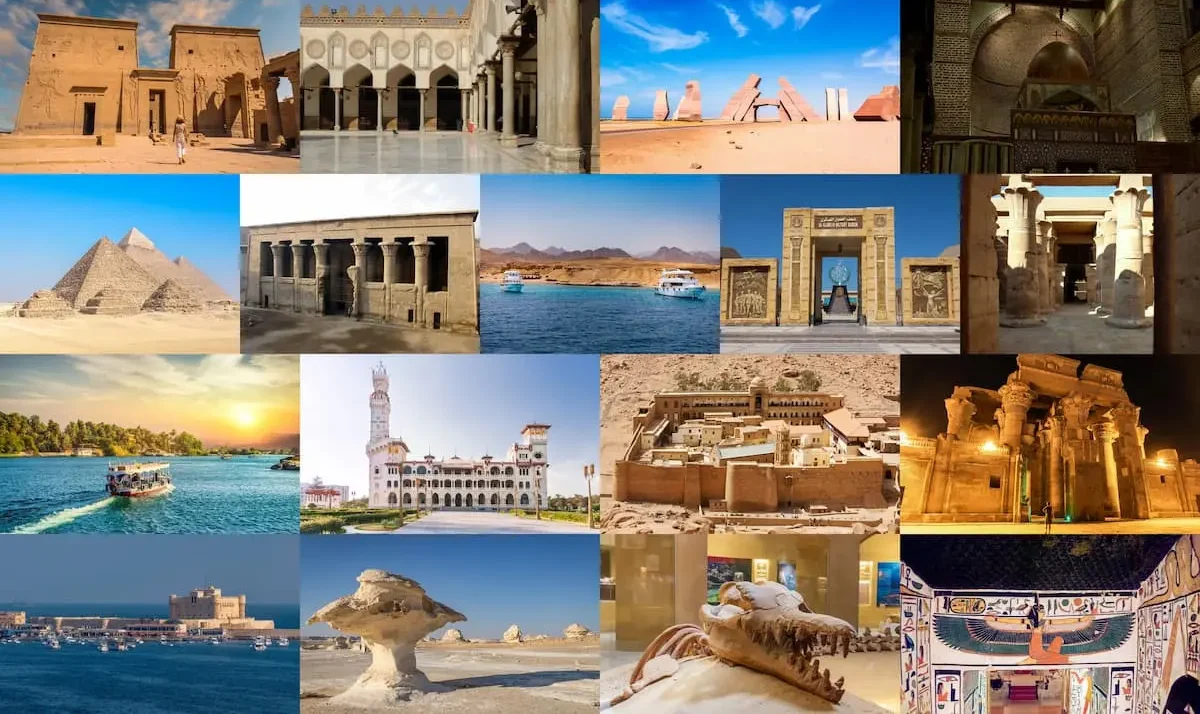
Egypt remains a top destination for global tourism, perfectly mixing ancient history with modern life to inspire every traveler. As the country spends billions on its new infrastructure and development plans, traveling between cities is becoming much easier, safer, and more comfortable for everyone. This remarkable transformation makes 2026 the perfect time to explore the most famous Egypt tourist attractions and experience their timeless beauty.
With the launch of new high-speed trains and expanded airports, reaching legendary ancient Egypt landmarks is faster and more efficient than ever today. Whether you are a first-time visitor looking for adventure or a returning traveler seeking deeper discoveries, this guide will show you the best places to visit in Egypt for an amazing and smooth journey.
1. The Great Pyramids of Giza and the Sphinx
The Pyramids of Giza stand proudly as the last remaining wonder of the ancient world, showcasing the incredible engineering skills of the Old Kingdom. By 2026, the entire plateau will feature brand-new visitor facilities and eco-friendly transport options, making your exploration of this historic desert site much more comfortable and enjoyable.
Key Fact: The Great Pyramid of Khufu consists of over 2.3 million massive stone blocks.
Expert Tip: Visit early in the morning to beat the midday desert heat and avoid the largest crowds.
Highlight: The legendary Great Sphinx, carved from a single giant ridge of limestone, remains the site’s most mysterious guardian.
Learn More: Discover the deep history of this iconic site on the official UNESCO World Heritage page.
2. The Grand Egyptian Museum (GEM)
Located within walking distance of the Pyramids, the GEM is celebrated as the largest museum in the world dedicated to a single ancient civilization. This spectacular modern building serves as a grand gateway to ancient Egypt landmarks, housing over 100,000 precious artifacts, many of which are being displayed to the public for the very first time.
Key Fact: The museum features the complete and breathtaking collection of King Tutankhamun’s treasures.
Expert Tip: Book your tickets online months in advance, as high demand is expected throughout 2026.
Highlight: Walking up the Grand Staircase offers a chronological journey through time with a stunning view of the Pyramids.
3. The Valley of the Kings
Hidden on the west bank of the Nile in Luxor, this ancient valley served as the secret burial ground for Egypt’s powerful New Kingdom pharaohs. It is home to more than 60 royal tombs, including those of Ramses II and King Tutankhamun, where the colorful wall paintings remain remarkably vibrant despite being thousands of years old.
Key Fact: Archaeologists are still uncovering new hidden chambers and secrets inside this massive necropolis.
Expert Tip: Your standard entry ticket covers three tombs, so choose them carefully based on current opening schedules.
Highlight: The tomb of Seti I is widely considered the most beautiful due to its incredibly detailed wall reliefs.
4. Karnak Temple Complex
Karnak is much more than a single temple; it is a vast, open-air museum and the largest religious complex ever constructed by human hands. Various pharaohs built and expanded this holy site over a period of 1,500 years, creating architectural wonders like the Great Hypostyle Hall, which features 134 massive stone columns and remains one of the most photographed Egypt tourist attractions.
Key Fact: The complex was the main center of worship for the ancient Theban Triad, led by the god Amun-Ra.
Expert Tip: Stay for the dramatic Sound and Light Show in the evening to hear the history come alive.
Highlight: The spectacular Avenue of Sphinxes, which connects Karnak to Luxor Temple, is now fully restored for public walking.
5. Abu Simbel Temples
Located deep in southern Egypt near the border, Abu Simbel features two magnificent temples carved directly into a solid rock mountain. King Ramses II built these colossal monuments to showcase his power, and in the 1960s, a historic international effort moved the entire structure stone by stone to save it from rising river waters, making it a triumph of both ancient and modern engineering.
Key Fact: Twice a year, the sun aligns perfectly to shine light deep inside the inner temple sanctum.
Expert Tip: Consider booking a short, convenient flight from Aswan to save time on your travel itinerary.
Highlight: The four giant statues of Ramses II seated at the entrance stand as iconic symbols of ancient majesty.
6. Philae Temple in Aswan
Philae Temple is a beautiful island monument dedicated to the goddess Isis, sitting gracefully amid the scenic waters of the Nile. Visitors enjoy a short, scenic boat ride to reach the island, which provides wonderful views of the river’s granite cataracts and leads you to one of the last places where ancient Egyptian religion was practiced.
Key Fact: Like Abu Simbel, this entire temple complex was moved to Agilkia Island to protect it from rising floods.
Expert Tip: Plan your visit during sunset to catch the most spectacular golden lighting on the temple walls.
Highlight: The Mammisi, or “Birth House,” is a beautifully preserved structure that celebrates the divine birth of the god Horus.
7. Historical Islamic Cairo and Khan el-Khalili
Historical Cairo is a vibrant UNESCO World Heritage site filled with stunning medieval mosques, traditional schools, and ancient fortifications. The majestic Citadel of Saladin dominates the city’s skyline, while the nearby Khan el-Khalili bazaar offers travelers a rich sensory experience filled with the sounds, scents, and colors of traditional Egyptian commerce.
Key Fact: Al-Muizz Street contains the highest concentration of medieval architectural treasures in the Islamic world.
Expert Tip: Hire a knowledgeable local guide to help you navigate the narrow alleys and explain the historic Mamluk architecture.
Highlight: The beautiful Mosque of Muhammad Ali, also known as the Alabaster Mosque, offers panoramic views of the entire city.
8. Siwa Oasis
For travelers seeking a quiet and remote desert adventure, Siwa Oasis offers a unique Berber culture and incredible natural beauty. Located far away in the Western Desert, this peaceful oasis is famous for its crystal-clear salt lakes and historic ruins, making it one of the best places to visit in Egypt for sustainable and eco-friendly tourism.
Key Fact: Alexander the Great historically traveled to Siwa to consult the famous Oracle of Amun before his conquests.
Expert Tip: Pack warm clothing if you visit during the winter, as desert temperatures drop quickly at night.
Highlight: You can swim and relax in Cleopatra’s Bath, a beautiful natural spring filled with mineral-rich waters.
9. The White Desert National Park
The White Desert is a breathtaking geological wonder that looks like the surface of another planet. Millions of years of wind erosion have shaped massive chalk formations into unique natural sculptures that glow magically under a full moon, making this park a premier destination for desert camping and stargazing away from city lights.
Key Fact: This desert area was once an ancient ocean floor, and careful visitors can still find marine fossils in the sand.
Expert Tip: Always travel with a reputable tour operator using 4×4 vehicles for a safe and professional desert safari.
Highlight: The famous “Chicken and Mushroom” rock formation is the park’s most celebrated natural sculpture.
10. The Bibliotheca Alexandrina and Citadel of Qaitbay
Alexandria offers visitors a fresh Mediterranean atmosphere that feels entirely distinct from the rest of Egypt. The modern Bibliotheca Alexandrina stands as a beautiful tribute to the ancient Great Library, while the historic Citadel of Qaitbay guards the coast, standing proudly on the exact site of the ancient Lighthouse of Alexandria.
Key Fact: The stunning modern library has enough space to hold over eight million books and houses several specialized museums.
Expert Tip: Enjoy a fresh seafood dinner at the local harbor to experience authentic Alexandrian cuisine.
Highlight: Adventure lovers can take specialized diving tours nearby to explore the fascinating underwater ruins of Cleopatra’s Palace.
Frequently Asked Questions
Is it safe to visit Egypt in 2026?
Yes, Egypt is a highly secure and welcoming destination for international travelers. The country has invested heavily in tourism security and infrastructure, ensuring that all major Egypt tourist attractions are well-protected for the millions of guests who visit each year.
What is the best time of year to visit?
The ideal time to plan your trip is from October to April. During these cooler months, the weather is pleasant and mild, making it very comfortable to walk around and explore the outdoor ancient Egypt landmarks.
Do I need a visa for Egypt?
Most international nationalities require a visa to enter the country. You can easily purchase a visa upon arrival at the airport, or apply early online. You can check official guidelines and requirements on the Egypt e-Visa Portal.
How should I dress when visiting historical sites?
While Egypt is very accustomed to international tourists, dressing modestly is a sign of respect. We recommend wearing comfortable, breathable fabrics, and making sure your shoulders and knees are covered when visiting active religious or holy sites.
Can I visit the GEM and the Pyramids on the same day?
Yes, they are located very close to each other. However, because both landmarks are massive and filled with incredible things to see, we highly recommend dedicating one full day to each site to enjoy a complete experience.
Conclusion
Egypt in 2026 successfully bridges the gap between its majestic past and a modern, high-tech future. By visiting these incredible Egypt tourist attractions, travelers gain a profound understanding of how human civilization evolved along the banks of the Nile. To fully experience the bustling cities, ancient temples, and serene desert landscapes, we suggest planning a stay of at least 10 to 14 days. Start planning your 2026 journey today to secure the best guides and accommodations!